Index Cards / Kartotek
Erika Råberg

In September, Moyra Davey came to Stockholm – a rare occurrence of the artist, photographer, writer, and filmmaker in Scandinavia. The occasion was a screening and book release of the Swedish translation of Index Cards (2020), a collection of essays by Davey translated by Emma Hatt and presented by Filmögon and Index. Two of Davey’s most recent films were screened, Four [чотири] (2025) and Forks & Spoons (2024), followed by a reading of excerpts in both languages.
While Davey’s work has long been shown internationally, her presence in Scandinavia has so far been relatively limited. Her first exhibition in the region, Hemlock Forest at Bergen Kunsthall (2016), has been followed by a handful of smaller occasions: screenings at Bonniers Konsthall and Moderna Museet at the invitation of artist Lisa Tan, and now this recent release. That the first full translation of Index Cards is in Swedish is a remarkable milestone. This, together with a solo exhibition recently opened at the artist-run Simian in Copenhagen, may signal a deepening interest in Davey’s work in the region.
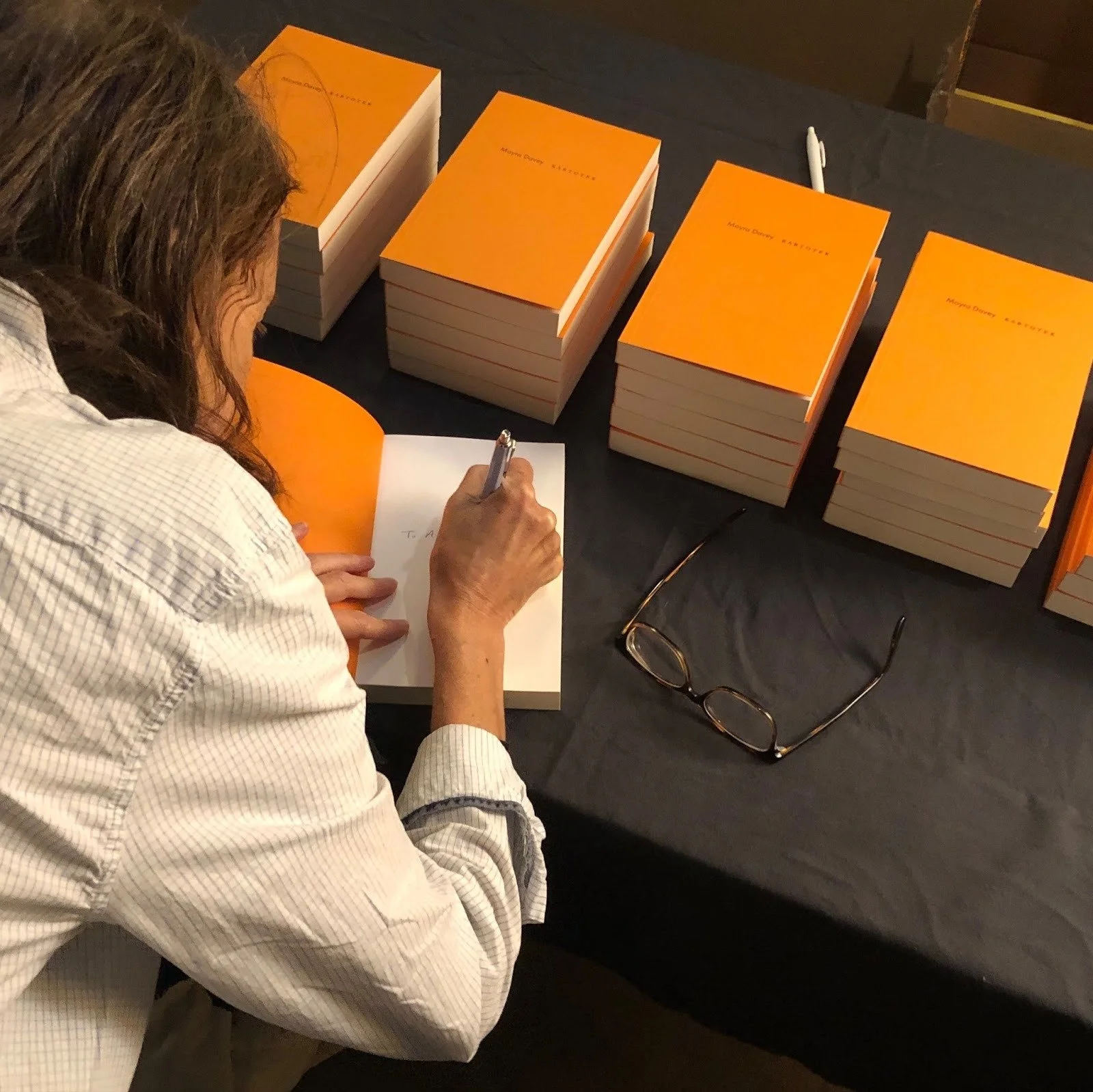
Courtesy of Emma Hatt.
Originally published in 2020, Index Cards brings together essays written between 2003–2019, forming a rich and layered record of thought. The collection traces Davey’s agile movements across genre and subject matter, often beginning with observations from daily life which scatter and rearrange themselves – like a stack of index cards – into diary entries, analytical writings on art, and other exploratory forms. As the critic Elisabeth Lebovici writes, “…her rhythm is one of the interval and fragment, the kind of fragment that the philosopher and poet Friedrich Schlegel compared to a ‘hedgehog’—closed in itself, but also interminably open to circulation, that is, to intertextuality and to citation.”[1]
Within this rhythm, Davey explores subjects as varied as psychoanalysis, labor, the body, memory, chance, and even writer’s block. Much of her writing is about writing itself, engaging a kind of metadiscourse and frequently offering encounters with the works of other artists and writers. Sometimes this makes for difficult reading. But as Davey herself writes, “I read Benjamin over and over, sometimes getting it, sometimes not.”[2] Photography, which Davey has been working with since the 80s, also recurs as a subject in many of the essays. Writing with the voice of both theorist and practitioner, she explores both the medium’s affordances and her ambivalence towards it.
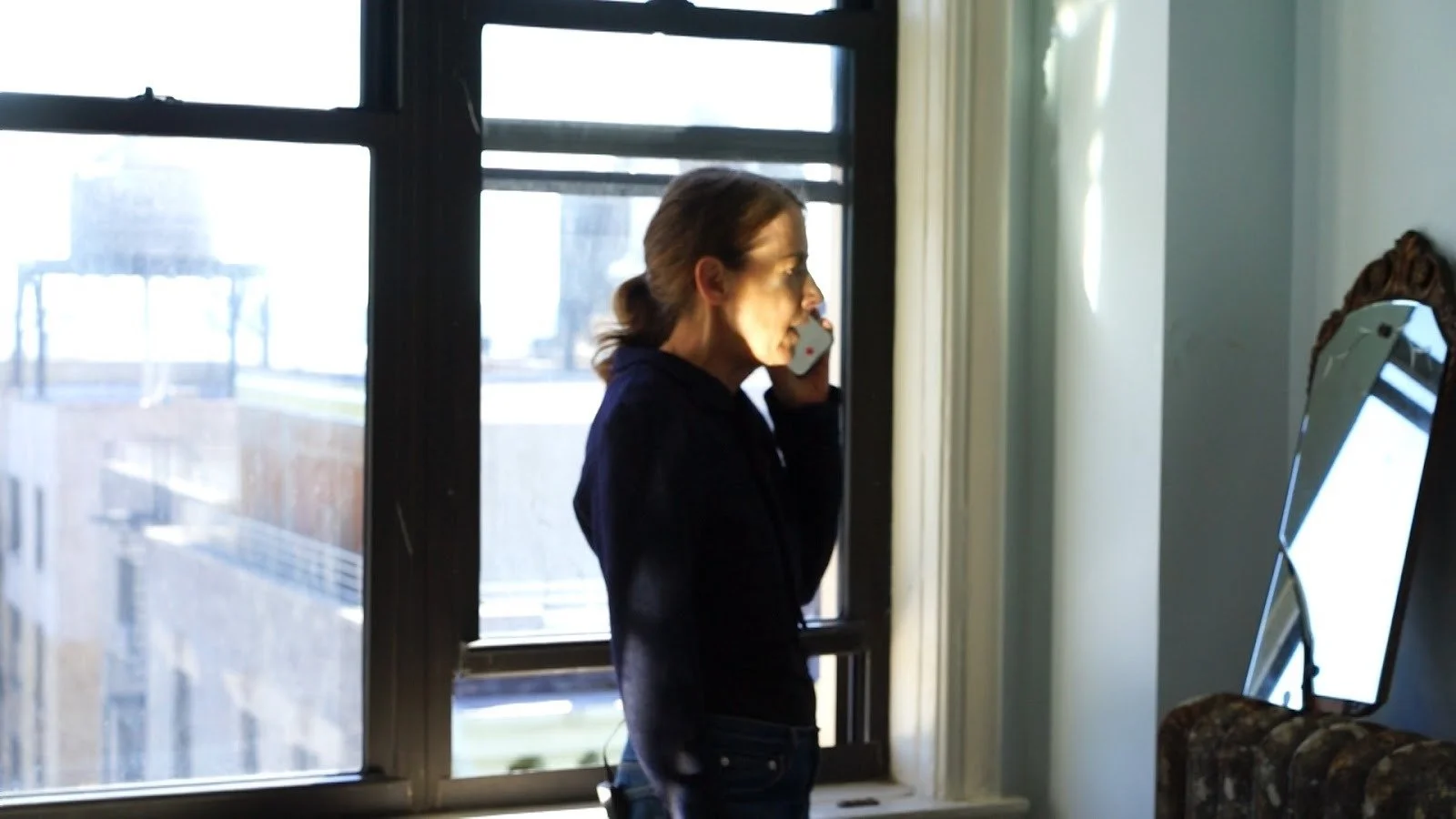
Moyra Davey, Four [чотири], 2025. Courtesy of the artist and Filmögon.
Index Cards is distinctive in Davey’s oeuvre for the extent to which it foregrounds text. Some black and white reproductions of her photographs appear, uncaptioned, but the writing exists primarily on its own. This sets it apart from previous publications and modes of working in which Davey engages text alongside and in relation to both still and moving images.
With Four [чотири] and Forks & Spoons, both screened at the event, we saw this layering unfold. Four [чотири] connects the works of four artists of Ukrainian descent: Paul Celan, Peter Hujar, Clarice Lispector, and Maya Deren, all grounded in a text performed by Davey as well as in translation. Here the viewer’s experience of the text unfolds through her characteristic method of speaking aloud recordings of her own voice, fed back into her ear through headphones, a technique she favors over traditional voiceover for how it leans towards performance over route memorization.
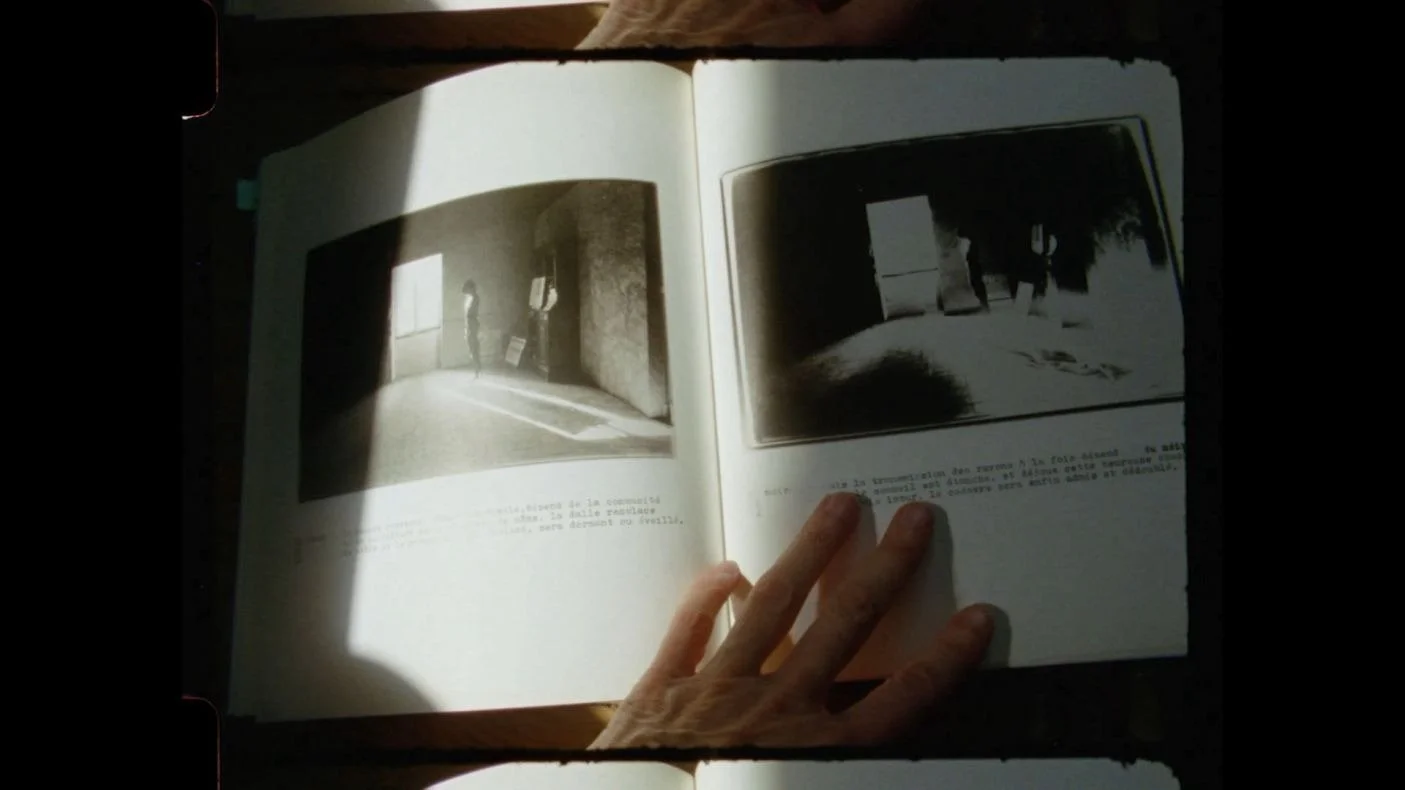
Moyra Davey, Forks & Spoons, 2024. Courtesy of the artist and Filmögon.
Forks & Spoons also showcases Davey’s layering of still and moving images with spoken text. Here she brings together the works of five artists across generations: Francesca Woodman, Carla Williams, Alix Cléo Roubaud, Justine Kurland, and Shala Miller. Their approaches to photography and their own bodies converge and unfold through seriality, repetition, long exposure, text, and darkroom manipulation of prints. Davey films their photographs as they exist in book form, and through scenes of reenactment, we see her take on a kind of portraiture and self-portraiture at once. The film was made for an exhibition of the same name, curated by Davey at Galerie Buchholz in New York in 2024, in which the artists’ photographic prints were on view, adding yet another layer.
Experiencing Davey’s work across text, film, and exhibition underscores the extent to which her thought unfolds across writing and image-making. Index Cards, now available in Swedish, remains central to this constellation, and now – with the translation in hand and a new exhibition on view at Simian – we are invited into her work anew.
Kartotek is published by Filmögon with support from the Arts Council and the City of Malmö.
Erika Råberg is a Swedish-American artist working across lens-based practices as a photographer, filmmaker, educator, and independent curator.
[1] Lebovici, Elisabeth. “Moyra Davey.” BOMB Magazine, October 1, 2014. https://bombmagazine.org/articles/2014/10/01/moyra-davey/
[2] Davey, Moyra. Index Cards. New York: New Directions Books, 2020, 25.